Skip to content

Build a Coaching System That Supports the Success of Every Teacher

Whatever stage educators are in their careers, coaching provides valuable feedback and support to improve practice, increase job satisfaction, and drive student success. But coaching is too often managed using spreadsheets and disconnected systems, making it challenging for everyone from administrators and instructional leaders to coaches and teachers to keep track of the process and make measurable progress.

Grow gives schools a digital infrastructure to strengthen their coaching framework.

Standardize coaching practices so every teacher receives consistent, high-quality support.

Make coaching visible with quick logging and clear records of feedback and growth.

Give leaders insight into coaching activity without adding extra meetings.

Create a Coaching Culture That’s Uniquely Yours

Grow brings role-based visibility and shared language to every level so leaders can align, coaches can act, and teachers can grow without extra busy work.

District & CMO Leaders

Align coaching practices across schools with consistent language, shared methods, and actionable reporting.

Principals

Gain visibility into coaching frequency and quality without extra check-ins with dynamic dashboards that indicate where follow-up is needed.

Instructional Coaches

Log observations, assign action steps, and track progress over time, all in one place.

Teachers

Receive feedback that’s specific, actionable, and easy to track so coaching feels supportive and consistent.

Capture Evidence. Assign Action Steps. See Growth.

Build momentum over time with a coaching workflow that turns everyday classroom evidence into clear next steps. Grow aligns leaders and coaches around timely feedback so progress is easy to see.
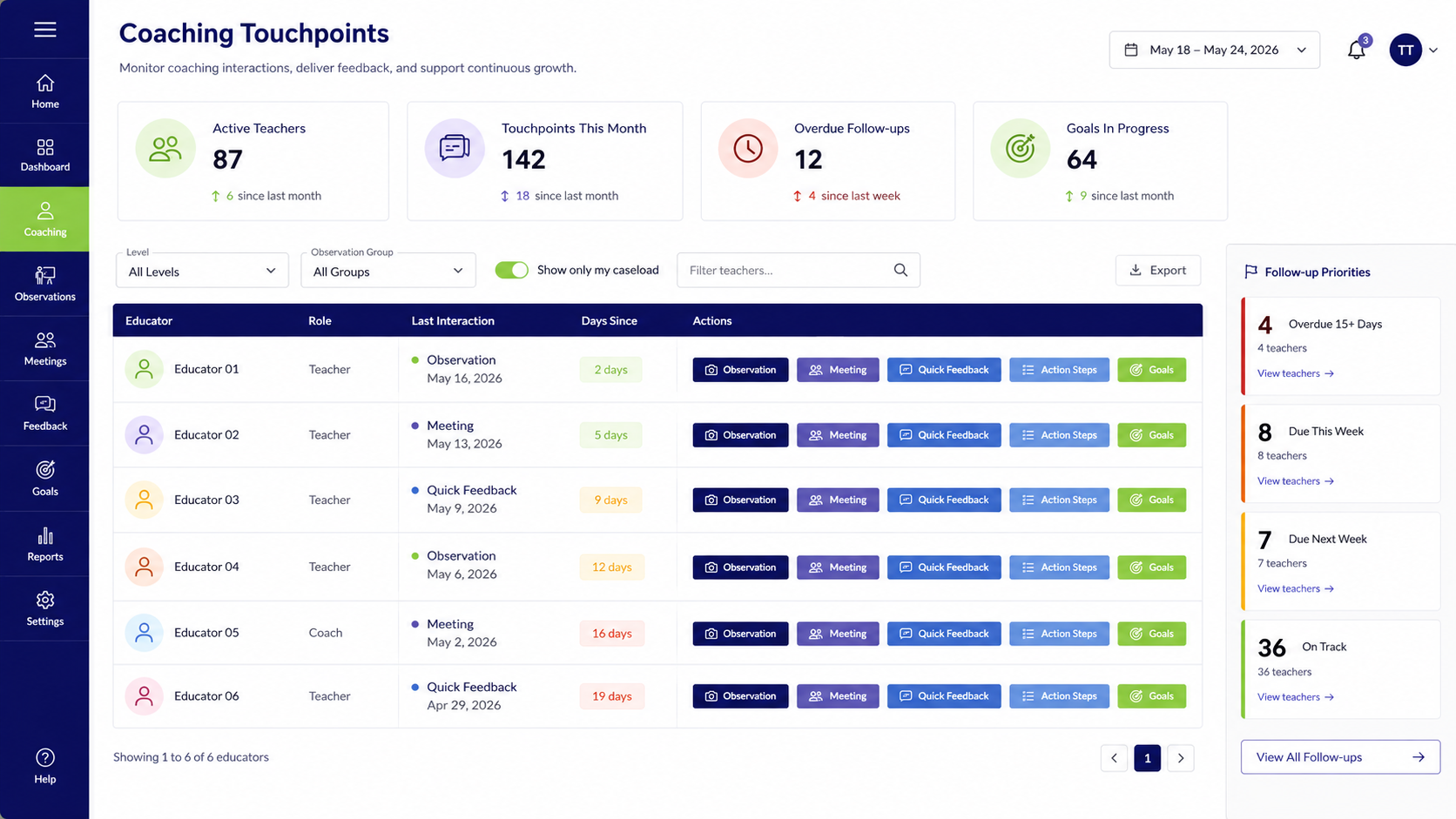
screenshot of Grow touchpoint dashboard
Touchpoint Dashboard: See Who Needs Coaching Now

Easily see which teachers need support using the Touchpoint Dashboard. Switch between campuses, scan a linked roster, and view the last interaction type plus “days since” to spot who needs support now. Schedule touchpoints to keep frequency high and accountability simple.

screenshot of Grow observation detail notes
Turn Walkthroughs into Next Steps with Digital Sticky Notes

Share a brief note with the teacher, add a private reflection for yourself, assign an action step from a dropdown, and notify the right stakeholders without leaving the page. These actions keep the momentum going between observations so coaching feels timely, supportive, and doable.
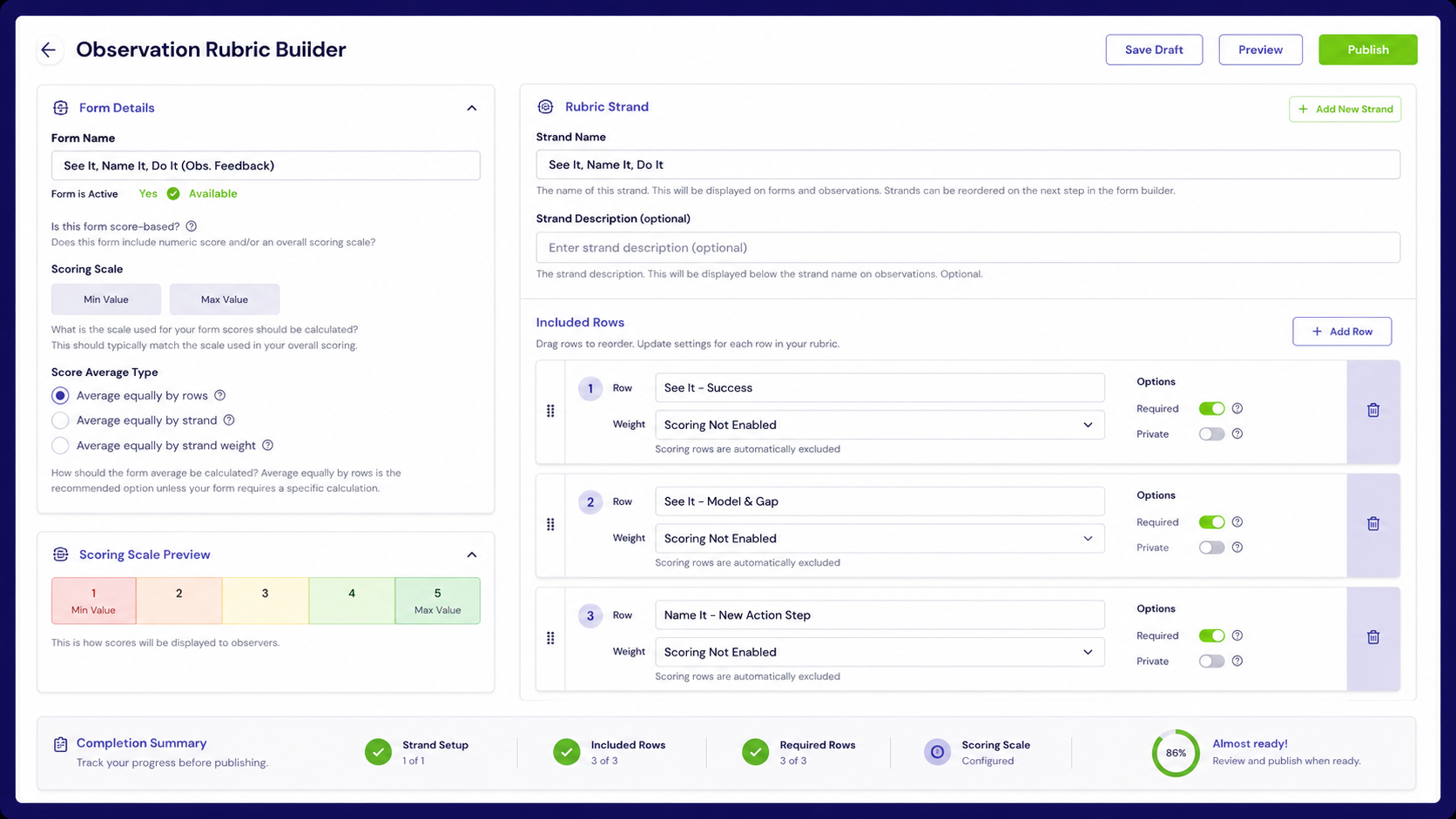
screenshot of Grow observation detail notes
Coach Consistently in Your Own Language

Whether your model is Get Better Faster, Relay, or something entirely your own, Grow makes it easy to create fully customizable observation forms. Mix and match components like timestamped running records and scored rubrics to create forms that reflect your coaching culture.
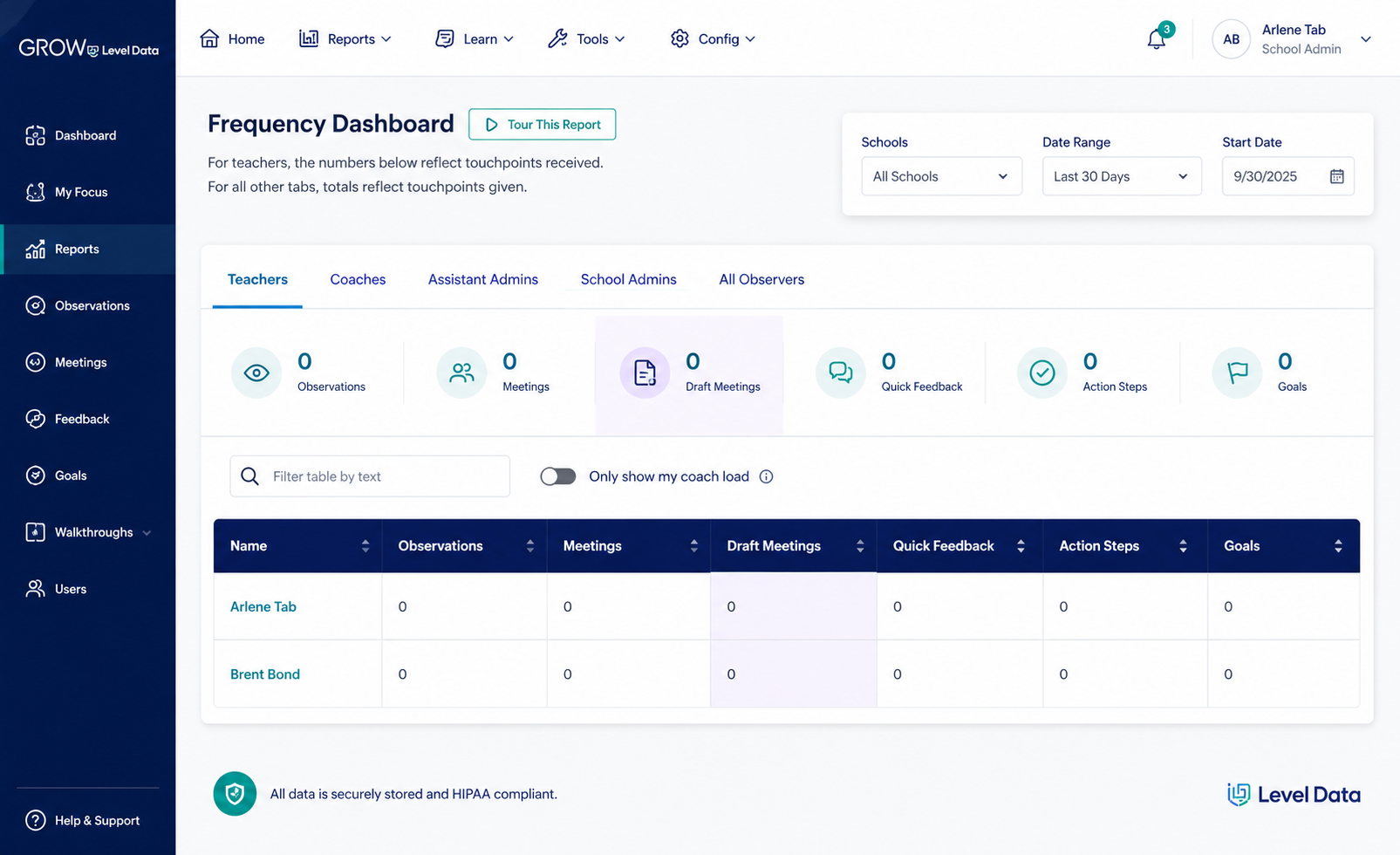
screenshot of Grow frequency dashboard
See What Coaching Is Working

Use 21+ reports and dashboards to see where coaching is happening, what kind of support is being delivered, and how performance is trending by domain and indicator. Turn that clarity into targeted professional development, shout-outs for coaches, and shared accountability.

Take a Self-Guided Tour of Grow

Start Tour

Track, Support, and Grow Your State’s Educator Workforce

Level Data helps state education agencies build a cohesive foundation to manage their educator workforce at scale with unified workflows for licensure, program approval, credentialing, and evaluations.

See What Schools Are Saying About Grow

Explore Schools logo

Grow has made leaders’ lives easier. We can track when teachers make changes to the lesson plan, and the data is right there. Did a teacher see the deadline? Did I review it? Did they make revisions and resubmit the lesson plan? Grow makes it simple to track that.
Jarren Kanze

Senior Director of Special Populations
Explore Schools
Ector ISD logo

Our commitment to ensuring every student has a high-quality teacher is unwavering; Grow is not just a tool—it is the coaching accountability piece that aids in the success of our district.

Dr. Scott Muri

Superintendent
Ector County ISD
Midland Independent School District logo

Earning a highly effective teacher designation doesn’t automatically translate into being a highly effective coach. Those are skills we have to grow and develop. And Grow helps us do that. With Grow, we can examine the type of feedback coaches are giving, and, at the district level, see how they can improve their coaching.
Jessie Garcia

Executive Director of Talent Development and Acquisition
Midland ISD
Firstline Schools logo

The trick isn’t that the tools changed how we use data—it’s that they enabled us to actually use data. With fewer forms and clearer structures, we can focus on what matters.

Scott Shirey

Chief People Officer
Firstline Schools
Carlsbad Municipal Schools logo

Without Grow, we’d still be in Google Docs, and principals would be stuck in the weeds. With Grow, we have true distributed leadership, accountability, and the ability to support teachers at every level.
Mindy Rogers

Director of Opportunity Culture
Carlsbad Municipal Schools
DeKalb County School District logo

In the DeKalb County School District, Level Data is used as a compass. Grow data ensures that feedback is timely, targeted, and aligned with district priorities, promoting a culture of accountability, reflection, and collective growth.

Erica Bowman

District Culture & Climate Coordinator
DeKalb County School District

Grow Resources

Strategies To Discover & Maximize the Return on Your Instructional Coaching

Let’s face it, coaching teachers can be expensive—sometimes very much so. With tight budgets and potential funding cuts looming, district leaders like you may be facing tough decisions about how to adjust programs like coaching. But even well-intentioned cuts, made with an eye toward cost savings, can quietly erode the very impact that drives coaching’s return on investment (ROI).   As one recent report titled Sustaining High-Quality Instructional Coaching in a Challenging Budget Environment, from Education Resource Strategies puts it, reducing coaching without restructuring support doesn’t actually improve ROI; it weakens it:   “Reducing instructional coach roles and placing those coaching responsibilities on principals and assistant principals, for example, decreases the investment side of the ROI equation. However, without reducing other responsibilities and protecting the time needed for effective coaching, offloading coaching to overworked school leaders may erode their impact on teaching and learning. And less impact with marginally lower investment does nothing to improve ROI.” Fortunately, you don’t have to rely on piecemeal anecdotes, limited participation, and the occasional snapshot of student scores to measure how coaching impacts your organization. This article outlines key strategies to discover and maximize your returns on this major investment through your coaching program’s implementation, impact, and influence. Let’s dive in.   Implementation: How teams manage coaching cycles   Why It Matters You may have the right coaching framework for your district’s culture, the best coaches hired or lead teachers trained, or even stable funding sources. But your coaching program may still fall flat on its face thanks to implementation issues. So many coaching programs sputter out because stakeholders struggle to operate consistently within their coaching model. Challenges range from disjointed documentation tools to haphazard meeting schedules to insufficient time for teachers to participate in coaching. Getting ahead of implementation pitfalls means building a strong coaching infrastructure upon which to deepen and expand coaching. These efforts may feel costly upfront, but they ultimately save your district time, money, and effort.   How To Discover Start by centralizing everything related to coaching under one digital roof, including rubrics, teacher feedback, instructional resources, coaching meetings, and more. A single source of coaching truth helps you (and everyone else participating) cultivate a common language to talk about coaching cycles, outcomes, and goals. It also saves everyone time and headaches by streamlining core coaching processes, like setting goals or tracking how often coaches meet with teachers. Last, leaders like you gain greater visibility into the health of the program itself. With centralized insights and data tracking, you will quickly see whether coaches have the capacity to meet with their coachees or if a particular teacher is engaging regularly with their peer coaching group. That way, you can help steer team members or adjust processes to keep coaching on track.   How To Maximize Continue to monitor and support each coaching team as they navigate each cycle through to completion, from logging observations to completing rubrics. Use your insights to guide coaches, restructure feedback groups, adjust staffing, etc. Fidelity to a coaching program, through both language and practice, maximizes the time and effort that each coach, teacher, and principal spends driving it. Eliminate the hidden costs of inconsistent implementations with Grow. Configurable, framework-agnostic, and format-flexible, Grow centralizes and simplifies data collection and core coaching processes. Learn more.   Impact: How coaching improves teacher growth   Why It Matters The point of coaching is to shift instructional practices and, by extension, impact student learning. But to measure how coaching yields that impact, you need concrete data. Data creates transparency between a coach and their teachers about how they progress towards their goals and where they can continue to grow. Data may also serve as evidence for a teacher’s self-reflection, or even help them advocate for themselves during separate performance cycles.Most importantly, the right coaching data supports leaders like you in making key decisions about the entire program, as well as keeping everyone accountable and informed about progress and potential gaps.   How To Discover Monitor how coaching feedback and activities impact each teacher, whether they lead to specific changes in classroom instructional practices or require follow-up meetings when improvements are not realized. You may also consider reviewing other data, such as student achievement scores, depending on program-wide and individual coaching goals. Consider also collecting qualitative feedback from participants about the program itself. Sending a survey twice a year or gathering insight through informal conversations can offer more opportunities to improve your coaching initiative.   How To Maximize While data can illuminate what needs to change in a program, it can also point to bright spots that deserve celebration. Use impact data to point out campuses or peer coaching groups that have seen tremendous gains. Data can also help educate other key stakeholders, such as parents and school board members, on the efficacy of the coaching program. Gain quantitative evidence of your coaching impact with Grow. Access comprehensive dashboards that highlight teacher, coach, grade-level, school, and district-wide patterns, allowing you to make decisions with data, not gut checks.   Influence: How coaching drives other key outcomes   Why It Matters At its best, instructional coaching creates a ripple effect in other strategic areas for your district, especially those related to teacher engagement, satisfaction, career mobility, and retention rates. In a time when many districts are strapped for funding, instructional investments like coaching become all the more valuable when they allow you to do more for your teachers with fewer resources.   How To Discover Triangulate coaching trends against other district strategic goals year over year. Ask yourself questions like:   Are there patterns among teachers in coaching roles, such as staying longer in their positions or getting promoted into leadership? How many teachers have opportunities to step up into a peer-coaching role, and does this affect school-wide teacher retention or engagement? Are there patterns in teachers’ performance and their engagement with coaching programs?   How To Maximize By investigating how coaching impacts other priorities beyond instruction, you build a strong…

Read More

Level Data Wins 2025 Tech & Learning Award of Excellence for ROI, Brolly, and Grow

Level Data, Inc. is proud to announce that three of its innovative K–12 solutions—ROI (Return on Instruction), Brolly, and Grow—have been named winners in the 2025 Tech & Learning Awards of Excellence: Back to School within the Secondary Education category. The annual Tech & Learning Awards of Excellence celebrate the most outstanding education technology products that demonstrate versatility, value, and the ability to solve real challenges in schools. Judged by a panel of industry experts, these awards recognize products that go above and beyond to support effective teaching and learning as districts prepare for the new school year. Tech & Learning’s editorial team shared: “The 2025 awards welcomed an abundance of high-quality entries. Our panel of industry experts judged the winning products and solutions to be of the highest standard in supporting effective teaching and learning practices when moving into the new school year. Every winner should be immensely proud of their accomplishments—a well-deserved congratulations from the entire Tech & Learning awards team.” How ROI Helps K–12 Leaders Maximize Educational Impact with Data-Driven Spending Empowering K–12 leaders to connect spending with student outcomes, ROI is an educational return-on-investment (eROI) platform that helps districts link cost, participation, and performance data across all instructional resources, digital and analog alike. Instead of relying on fragmented systems or usage reports, ROI provides clear, actionable insights into what’s working, for whom, and why. With intuitive dashboards and automated data integration, district leaders can evaluate programs for effectiveness, equity, and impact—all in one place. Judges praised ROI for its ability to bring clarity and inclusivity to district decision-making: “What makes this product stand out for me is its ability to track both digital and analog resources. Being able to compare the use and success of all learning resources is extremely important. Also, access to their in-house data people to help disaggregate the data is very helpful.” Brolly Simplifies IEP Tracking and Compliance for Special Education Teams Brolly streamlines IEP service tracking and compliance for special and general education teams. It is a web-based platform that replaces spreadsheets and paper logs with an easy-to-use digital system for managing IEP services, accommodations, and modifications. Educators can log services, link them to goals, and monitor progress in real time—while administrators gain visibility into fulfillment and compliance across the district. By simplifying documentation and improving collaboration, Brolly ensures that students receive the support they’re entitled to, while giving teachers more time to focus on instruction. Judges recognized Brolly as an essential solution for overextended special education teams: “This is a much needed solution that helps the very busy and over-extended CST members track compliance. This can help improve outcomes for the CST and most importantly the students.” Grow Elevates Instructional Coaching and Teacher Development in K–12 Districts Grow is a unified platform for instructional coaching and professional growth. It transforms how schools support teacher development by centralizing observations, feedback, and progress tracking in one powerful platform. Districts can customize Grow to align with their coaching frameworks, giving leaders visibility into every coaching interaction and ensuring consistent, high-quality support across schools. The result: stronger instructional leadership, better teacher retention, and measurable student growth. The judges commended Grow for fostering collaboration and a shared language around professional learning: “This is a great tool for documenting and tracking professional growth. The use of a common language is so important in any organization and can keep all stakeholders on the same page and focused on goals.” This recognition underscores Level Data’s commitment to delivering powerful, easy-to-use solutions that remove the complexity from K–12 data management—helping educators focus on what matters most: improving student outcomes. Learn more about Level Data’s award-winning solutions on the Tech & Learning website and in upcoming features from the publication.

Read More

Data: The Key to Impactful Teacher Coaching

Research has long demonstrated how instructional coaching drives teacher growth and improves student outcomes. A coaching program involves many moving pieces unique to the district or school implementing it. But every coaching initiative relies on data to succeed, regardless of its context. Instructional coaching without data is like hiking without a compass, a map, or any mile markers—it leaves an explorer to wander without direction or guidance, making it unlikely they will ever reach their destination.  In this article, we will unpack why data is critical at every stage of coaching to drive bigger student (and teacher) gains, from isolating coaching needs to analyzing the educational returns on these initiatives. Data as a compass: Identifying coaching needs Every coaching effort begins with clarifying what a teacher, school, and even a district needs to gain from it. Data from student assessments and teacher observations guide educators towards the best opportunities for instructional improvement, much like a compass points a traveler toward their destination. Student Assessments Academic data reveals gaps in student learning that coaching may help close. At the school level, coaches can examine data trends to identify where groups of students struggle, whether it’s with a specific standard or content area. Coaches can also use this data to collaborate with principals and discuss which teachers may most benefit from coaching.  Achievement data further helps districts align teacher growth activities, like coaching, with specific goals outlined in their strategic plans. It is especially powerful when districts can coordinate coaching across campuses to target, for example, reading instruction to boost district-wide reading scores, rather than rely on schools to determine how to address this goal individually.  Observational Data Observational data complements achievement data by further clarifying coaching needs for individual teachers. Whether through in-person visits or video-recorded sessions, observations offer a baseline understanding of a mentee’s instructional strengths and areas of improvement needed. Examining both student assessment and teacher observational data gives coaches a holistic perspective on coaching needs before they even meet with teachers. Data as a map: Tracking goals and coaching fidelity After needs are identified, data is still critical for setting individual coaching goals within a coaching framework. This shared “map” helps all stakeholders move collectively toward the desired student outcomes. First, coaches and teachers use data to set clear, quantitative, and rigorous growth goals for their time together. Data collected against these goals will inform all subsequent coaching support, including targeted feedback, sharing best practices, reviewing exemplary instructional resources, and more.   Research also shows that, beyond individual goal-setting, how coaching is implemented across a building greatly impacts its success. With this in mind, school and district administrators need data to assess if coaches, teachers, and other involved staff are following program implementation with fidelity, and whether the implementation itself needs to shift.  Implementation data includes the target dosages of feedback or observational sessions, frequencies of coaching meetings, individual coach capacity versus teacher coaching needs, etc. Centralizing both individual coaching activities and broader program data like this is key for districts to ensure a program is implemented with fidelity across all sites.  Level Data’s Grow platform does precisely that. Learn how this solution amplified a school’s data-driven coaching for staff, bringing stronger student achievement as a result. Data as mile markers: Realizing instructional gains Ultimately, a district needs to answer the big question about its coaching efforts: Are they improving student learning? This means revisiting student assessment data and looking for meaningful changes that align with the original coaching goals set, much like a hiker seeks mile or trail markers to ensure they are still on track. Regularly reviewing this data also offers opportunities for coaches to tweak their supports for teachers and for administrators to make adjustments to the broader implementation of coaching. Student achievement linked with coaching goals can also inform performance evaluations by telling a quantitative story about a teacher’s development. However, it is essential to keep the coaching process itself separate from evaluative practices, as this protects the trusting relationship between a coach and teacher. Did you know? Our Talent Management platform seamlessly integrates core employee activities across performance evaluations, district strategic goals, licensing, recruiting, and more. Combine it with the Grow solution to further accelerate teacher growth and retain top talent. Learn more. A step further: Measuring the eROI of coaching Some districts may stop here with analyzing data in a coaching program. However, there is one more step necessary to understand the impact of coaching: quantifying the “educational return on investment” (eROI). eROI isn’t the simple profit-to-cost ratio that the business world uses. In education, this metric also accounts for the student learning outcomes associated with a particular program, like coaching.  Districts have a responsibility to their community to use their funds wisely to help students thrive, especially as K-12 education federal funding and other monetary sources freeze or shift. eROI clarifies whether the dollars spent on teacher professional learning—like coaching programs—are yielding the academic results desired.  However, districts struggle to quantify eROI for their investments, thanks to issues with data accuracy, disparate datasets, and faulty connections between data systems. Level Data’s Return On Instruction platform removes these barriers by centralizing funding, student outcomes, and participation data within one solution. Watch this webinar to discover how this solution saved one district over $400,000 while simultaneously improving student learning gains.  Cultivate educator and student growth with Level Data Through consistent implementation, clear goals, and ongoing progress monitoring, coaching helps teachers achieve long-term student gains. With Level Data, districts can depend on accurate, timely, and centralized data to guide their instructional coaching, professional development, and other growth initiatives, as well as justify the funds behind them. Contact us to see our ecosystem in action.

Read More

Turn Coaching into Daily Momentum

Join districts using Grow to unify coaching methodology, increase accountability and visibility, and make data-driven decisions that improve retention and student outcomes.

Book a Free Consultation
Back To Top