Skip to content

Focus Instructional Spending in the Right Areas

Core instruction is the most crucial driver of academic success, and the largest single investment most districts make. It’s also the most complex to evaluate. Our Return on Instruction (ROI) platform helps district leaders measure the value of Tier 1 instruction by answering critical questions such as:

Where are instructional strategies succeeding or falling short? And for whom?

Does classroom mastery match student performance data?

Should we reallocate funds towards instructional gaps or resource-related issues, or both?

Are there trends or gaps in access, engagement, and outcomes by cohort, grade, or program?

Zoom Out or Drill Down: Reporting for Every Level

As school budgets tighten, improving core instruction—rather than relying on costly Tier 2 and Tier 3 interventions—is a crucial strategy for maintaining student support. That’s why our reports offer insights to determine whether your most critical investment is delivering the best results possible.
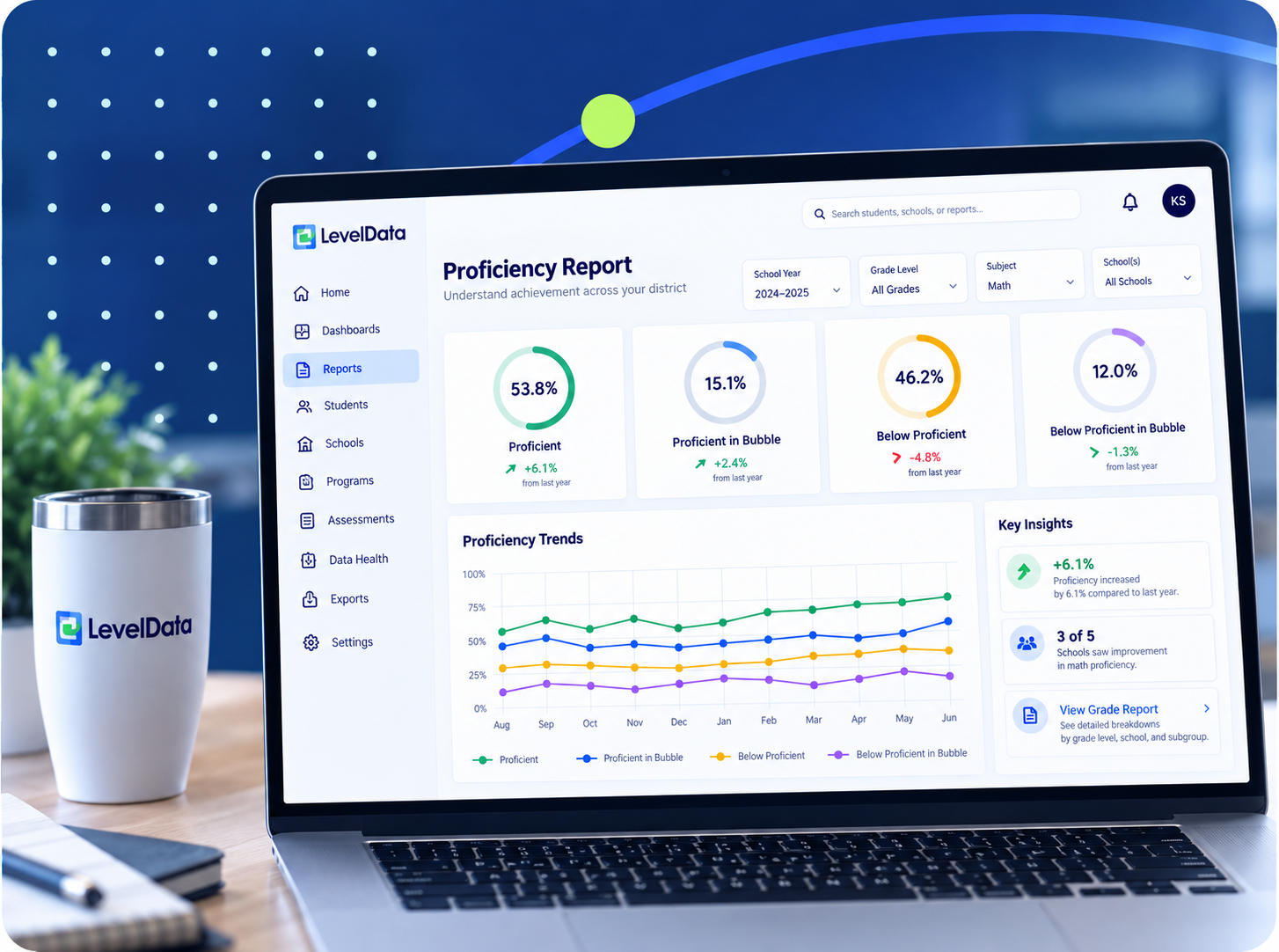
ROI ACE Report
Pinpoint Grade Inflation and Deflation Trends

If your students’ GPAs are increasing while their standardized test scores are declining, there’s a gap that needs to be addressed. Our ACE report helps leaders pinpoint what those gaps are by identifying classrooms with patterns of grade inflation or deflation.
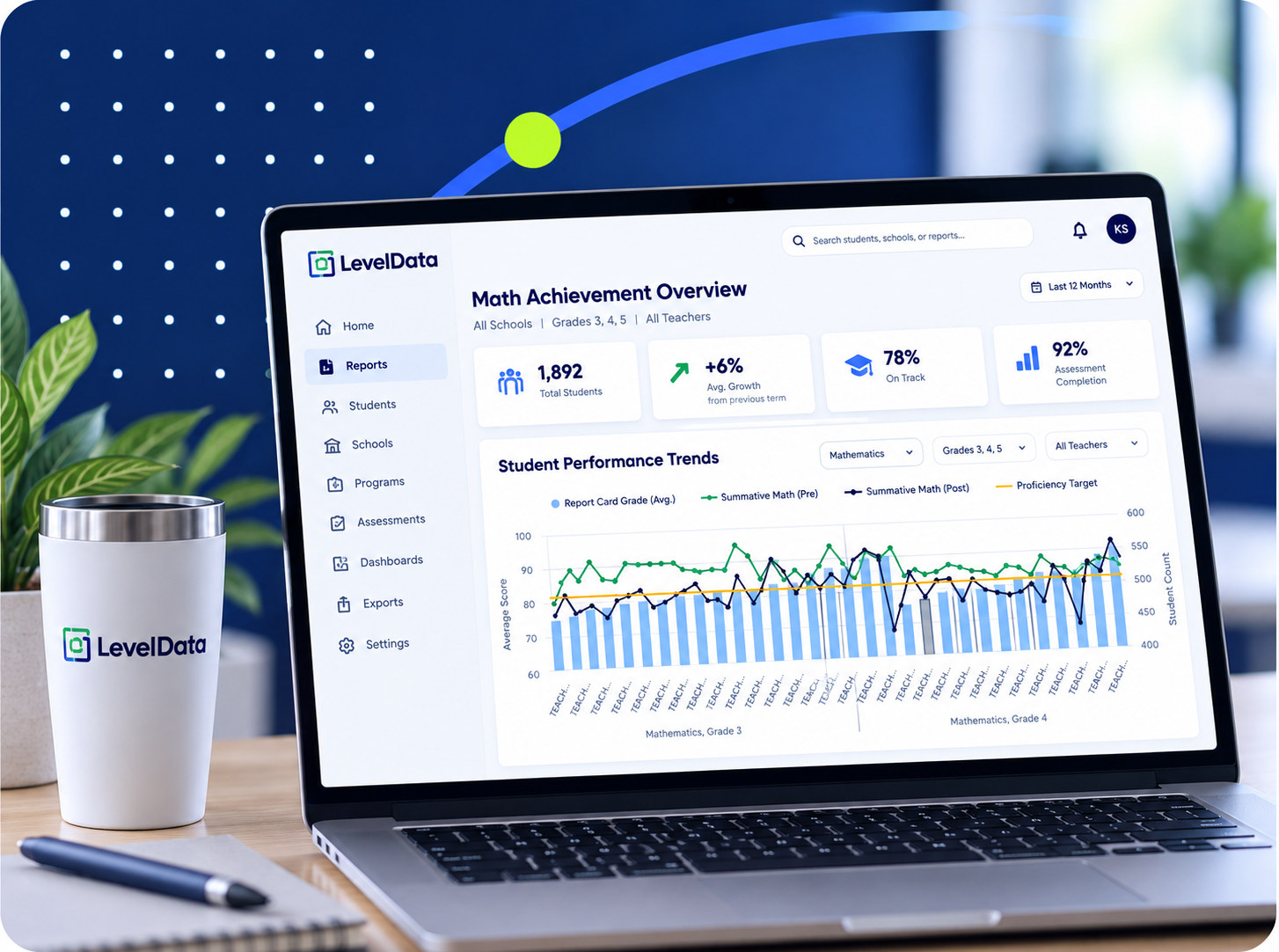
ROI Assessment Report
Assess the Assessments

ROI surfaces whether benchmark assessments are effectively evaluating if students are progressing toward mastery of state standards, or if funds could be better invested in different assessments that are more tightly aligned with state summative assessments.
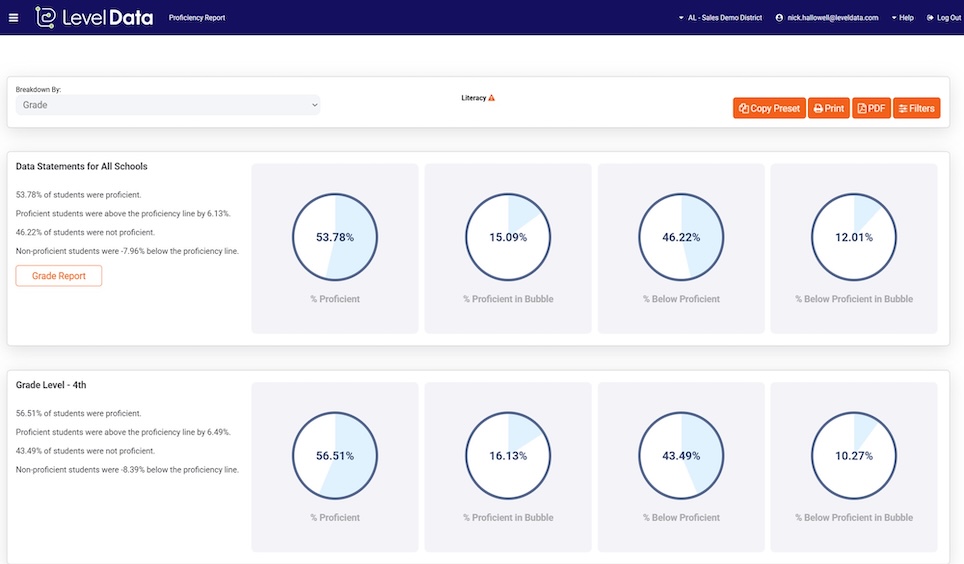
ROI Literacy Report
Meet the Demands of New State Legislation

To meet state literacy and numeracy requirements, Tier 1 instruction must be effective, engaging, and tailored to individual student needs. This ensures students are prepared for advanced learning as they progress to each grade. ROI helps you check your data in real time, so you can see if students are on track to meet state goals.

See What District Leaders Are Saying
[The ROI Proficiency Reports] are telling us that we are making progress with students. We may not have 85% of our students proficient yet, but we have a lot of students moving towards proficiency and that’s really exciting to see. It’s really difficult when you’re in the weeds of making a big change to know whether or not what you’re doing is worth it. These reports and the partnership with Level Data has been very helpful to see we’re focused on the right things.

Jennifer Bowles
Director of Early Education
Farmington Municipal Schools
Elmore County Public Schools logo

Initially, the goal was about setting the bar for curriculum performance and ensuring consistency across the district. But the ability with ROI to drill down into specific student groups has been a game changer for us.

Richard Dennis
Superintendent
Elmore County Public Schools
DeSoto County Schools logo

ROI helps us see at both a macro and micro level which academic investments are having the biggest impact on learning, so we can do more of what works and less of what doesn’t.

Corey Uselton
Superintendent
DeSoto County
Elmore County Public Schools logo

[The] Principals and teachers know we’re going to look at these reports quarterly and develop action plans as a result. ROI allows us to have those critical conversations about instructional quality.

Ayena Jackson
Middle School Director
Elmore County Public Schools

eROI Resources

Amidst Staffing Turbulence, eROI Offers Stability In Three Ways

Today’s K–12 staffing environment remains uncertain to say the least, and this instability comes with real consequences. Not only does a staff departure at any level impact student learning, but it also strains a district’s budget and the staff who stay behind. Understanding the academic return on investments in staff, like teacher recruitment and retention, helps district leaders more effectively utilize their resources to weather the storm.  In this article, you will learn the meaning of ROI in education and how it supports districts with strategic staffing investments. You will also discover three strategies for allocating district funding, time, and effort to keep student learning going, even amidst staffing uncertainty. Let’s dive in. The impact of educational ROI on staff retention and efficacy Unlike the business world, a district’s “return on investments” isn’t just a ratio of profits to costs. Student learning outcomes weigh heavily in the equation, which makes “educational ROI” a unique yet critical data point for strategic district planning and decision making. And K–12 leaders need this insight now more than ever as they face budget uncertainty, especially around teacher training and retention funding.  The results of a recent EdWeek Research Center and Gates Foundation survey with district and school administrators underscore this urgency. In their responses, over 30% of participants pointed to staffing turnover at all levels of their organization as a major obstacle to aligning their financial and instructional priorities:  EPE report: “Survey respondents most commonly pointed to… an inability to sustain [instructional and fiscal] alignment over time due to leadership or staffing changes (35%) [and] inconsistent instructional goals stemming from staffing turnover (33%).” Mismatches between strategic instructional goals and budget decisions can spell disaster. Districts may waste limited dollars on ineffective learning programs or miss opportunities to deepen investments in initiatives that positively impact student learning. In more extreme cases, districts often make financial decisions to save money quickly, but end up with negative student learning and staffing consequences.  eROI is the key to aligning funding, instructional priorities, and educational investments, including those made in hiring, recruiting, training, and retaining teachers and other staff.  Let’s explore three strategies for leveraging eROI analyses to manage, mitigate, and even prevent challenging staffing turbulence.  1. A cross-functional team analyzing eROI together District decisions can be made in silos, with individual departments spending their budgets on programs or people based on metrics they identified independently (more on this in a moment). Cross-functional decisions about funding and program impact not only help stretch a more limited department budget but also empower district administrators to make more effective investments.  Leta Dietz Smith, a Title I and ESSER Grant Manager at Lee County School District, regularly uses eROI analyses to maximize her district’s funding against key instructional priorities. As she shared in a recent webinar, no analysis could happen without first bringing together the right people with the right expertise: “We have to empower our finance people to start making decisions that impact education, and we also need to empower our educators to make effective decisions that financially impact the district.” From a staffing perspective, a blend of institutional knowledge pays off. Human resources offers expertise about salary schedules, employee training, recruiting, and more. The business office holds the keys to funding sources and their rules, including for dollars that fund unique roles or extra duties, like teacher-leaders. The curriculum and instruction department can contextualize the student learning goals behind investments made in teachers, like coaching for new or early-career teachers  With all these experts in one room, district teams can begin triangulating valuable insights to build a more cohesive picture of staffing investments, their value, and, as a result, their importance for budgeting. 2. The right success metrics for the right priorities A representative team alone does not unlock the value of eROI. Administrators must also share a common language and understanding of three key factors related to every educational investment:  Available funding and funding sources Relevant student participation, usage, and academic data The district’s strategic instructional priorities Let’s continue with instructional coaching as our example to demonstrate why this alignment is so crucial. Most districts spend time, money, and effort on coaching with the aim that, by improving a teacher’s instructional practices, they in turn improve a student’s learning outcomes.  Naturally, district leadership wants to see tangible results given the costs of these programs, but which results matter most will differ based on who you ask. The business officer values budget fidelity, whereas the curriculum and instruction officer wants to see student test scores rise. In truth, these and other “success” metrics are useful, but they become more meaningful when prioritized and contextualized against one another.  For instance, a district in a financial pinch might consider downsizing its coaching team or cutting stipends for teacher-leaders for immediate relief. But this benefit may incur other academic and even staffing costs, like a smaller internal pipeline for future leadership roles or a more stretched (but less effective) coaching team.  This district will want its business officer and its curriculum and instruction officer speaking the same language and referencing the same shared set of priority metrics (that they both understand well) before recommending this or any course of action.

Read More

Three Reasons Why eROI Makes You A Better District Leader

Today’s K–12 education funding landscape requires that district leaders make more strategic decisions about their resources than ever before. But challenges like staff turnover, renewed uncertainty about future federal funding, and even leaders’ perceptions of their own financial management skills can get in the way of smart fiscal choices.  During such turbulence, district leaders need to work closely and effectively with school principals, teachers, board members, parents, and the local community. Assessing your educational return on district investments (or eROI) can help you build stronger cohesion across this diverse group.  This article explores the value that eROI adds to these relationships. We will also share concrete ways to use this metric with key stakeholders that make you a more effective leader and move your organization toward its top priority: improving student learning.  1. eROI connects the dots across learning outcomes, usage, and spending So many administrators build budgets, allocate resources, purchase programs, and more with incomplete information, and for a good reason. It’s hard to wrangle data measuring a program’s impact on learning, its usage, and its costs. But that precise intersection reveals when, where, and how student learning happens in the context of an educational investment. Think about your district’s academic services designed to help struggling students, such as Tier II and Tier III interventions in an MTSS model. How do you know that you are getting the biggest academic “bang” for your “bucks” invested? Student participation or usage data tells you if and where classrooms actually use a district-purchased resource, but usage alone isn’t a measure of learning. Academic outcomes like report card grades or progress monitoring scores show how students are growing, though not necessarily how a specific resource contributes to that growth. That resource’s cost reveals its impact on a district’s bottom line, but not on advancing its strategic priorities.  eROI approaches this data holistically, requiring administrators to ask deeper questions such as: Do we have redundancies among our Tier II programs? Are there programs we no longer need? Do teachers not know about certain district-purchased programs? Are teachers following vendor or district-provided guidance for a program with fidelity? If not, why? Do some non-district purchased programs have high utilization? If so, why?  What academic impact does a higher dosage or frequency of usage of these Tier II resources yield? For which students, classrooms, and/or grade levels? Instead of relying on piecemeal data or guesswork, you detangle patterns of each resource’s usage and cost against the relevant academic outcomes. And this line of investigation allows you to make more nimble decisions in context. That is the power of eROI.

Read More

Are You Getting a Return on Your Biggest Instructional Investment?

Strengthening core instruction isn’t just a pedagogical imperative. It’s a smart financial strategy. We can help make sure you have the right data to set that strategy.

Book a Free Consultation
Back To Top