

The future of today’s students depends on the decisions made in every classroom, school office, and district building. As budgets tighten amidst concerns with national trends in academic outcomes, district and school administrators need the right tools and data to help them choose and use their resources more effectively.
This article unpacks why data-driven decision-making tools are more important than ever for school administrators and district leaders. We then explore key features to look for in the most efficacious decision-making platforms and challenges to manage when selecting and implementing such tools.
Table of Contents
I. Understanding Data-Driven Decision-Making in Education
II. What Are the Best Tools Administrators Can Use for Smarter Decision-Making?
III. 3 Key Benefits of Data-Driven Decision-Making Tools for K–12 Education
IV. Core Features School Districts Should Look for When Evaluating Data-Driven Decision-Making Tools
V. Decision-Making Challenges Administrators May Face Without the Right Tools
VI. How To Implement Data-Driven Decision-Making Tools in Your District
Understanding Data-Driven Decision-Making in Education
Data-driven decision-making means using data (quantitative as well as qualitative) to make choices and plans, rather than relying on intuition or observation. Beyond a trendy buzzword, this process contributes to the success of any organization in any sector because leveraging data yields clearer judgment and better decisions.
In K–12 education, leaders use student, teacher, and operational data to guide long-term strategic planning for their districts and to inform the day-to-day actions to achieve these goals. Empirical research shows that districts stand to gain measurable improvements in key student outcomes—including academic growth and increased attendance rates—when they employ systematic data practices in instruction and decision-making (Miller et al., 2025).
That connection matters because the stakes are increasingly high for districts to prepare students to succeed in the rapidly evolving world beyond the classroom.
What Are the Best Tools Administrators Can Use for Smarter Decision-Making?
Today, educators have their pick of software solutions to support long-term strategic planning and smarter day-to-day decisions. Below are a few examples of foundational digital tools you can find in most schools and districts.
IEP Management Software
Special education teams lean on IEP systems and management software to manage services for students with disabilities and ensure compliance with legal mandates. However, effective IEP software goes beyond tracking and reporting service minutes. The best platforms create cohesion and visibility across the entire team, supporting students with IEPs. That way, SPED teams can not only see that students are receiving required services but also make informed decisions about how to adapt services and goals in response to their progress.
Teacher Coaching Software
Coaching helps teachers improve their instructional practices over time, driving student academic gains and educator professional growth. Managing a coaching program, from structured feedback to progress tracking against individual goals, quickly becomes burdensome for districts without the right digital solution in place. A comprehensive online teacher coaching platform streamlines data collection and provides coaches and leaders with insight into how coaching is impacting student learning and growth.
Return on Instruction Software
Goals outlined in district strategic plans often go unmet as limited funding is wasted on ineffective learning tools or misallocated away from resources that do drive learning. To improve the K–12 ROI (return on investment) of their purchases, districts use return on instruction platforms that leverage funding, student outcomes, and usage data, alongside AI-driven strategic insights to make defensible budget decisions that serve their students.
3 Key Benefits of Data-Driven Decision-Making Tools for K–12 Education
When making a data-informed decision, K–12 leaders often face an overwhelming amount of disjointed information, making it tough to see the prophetic “forest through the trees” or even know which “trees” matter. This challenge is compounded by the limited time an administrator has to gather, review, and understand these data sources.
Modern data-driven decision-making tools are certainly faster and more scalable for administrators than outdated, manual methods for gathering information. Data becomes accessible in real-time rather than over weeks or even months. The platforms that centralize budget allocations make it easy for administrators to quickly review not just the cost of a program but how many seats or licenses purchased are actually utilized.
The benefits of data-driven decision-making tools go beyond logistics; they equip school and district leaders to:
- Improve student outcomes
- Efficiently allocate limited resources
- Increase transparency and accountability with key stakeholders
#1: Improved Student Outcomes
Student success is every district’s strategic objective, and student-centered data points can help leaders invest in and grow programs that work for learning, but only if administrators can access and interpret the data.
This is where data-driven decision-making tools come in. Trends in academic data might reveal misalignment between curriculum and assessments. Multi-tiered System of Supports (MTSS) rely on outcomes data to fluidly decide which students need small group or individual intervention to reach their learning goals. Administrators use coaching data to ensure teachers are receiving the support they need to deliver high-quality instruction.
With the right tools presenting crucial insights, school and district leaders can focus on making decisions, from identifying what targeted feedback to give a teacher after a walkthrough to whether or not to invest in a new literacy curriculum.
#2: More Efficient Resource Allocation
Resource allocation goes hand in hand with improving student outcomes, as schools and districts are increasingly asked to do more with less. With clear data showing the academic impact of every district or school investment, as well as its usage and financial cost, K–12 administrators can more effectively position funding, programs, and people to maximize learning impact.
Take a building with declining student enrollments, an increasingly common challenge for public U.S. schools. The district must make tough decisions about staffing, class sizes, and academic programs, not only to support enrolled students but also to attract new families. Clear, quantitative information about the impact of every investment, not just observations or “gut checks,” is needed. Triangulating the cost, academic benefits, and usage of a digital tutoring program, or professional learning community, for example, equips district leaders to understand the impact of changing these investments.
Though these decisions remain challenging, administrators can lead their teams through such tough times with greater confidence and evidence.
#3: Increased Accountability and Transparency
In parallel to shrunken budgets, today’s districts also face increased scrutiny about how spending drives student growth.
Data-driven decision-making tools are a critical resource for leaders to collaborate with central stakeholders. A superintendent can use data to tell a more compelling story to the school board about her decisions to expand a specific program proven to impact learning and cancel another that failed to deliver academic gains. A principal can better cultivate a family’s trust and support for changing a student’s IEP goals by offering quantitative insights about current services and their child’s progress on his goals.
With greater accountability and transparency, district and school leaders can forge stronger partnerships with stakeholders to better serve students.
Core Features School Districts Should Look for When Evaluating Data-Driven Decision-Making Tools
The education technology industry is in the midst of a reckoning, with parents, educators, politicians, and others seeking to curb screentime and demanding stronger evidence of the learning impact of every tool purchased. But to identify those effective learning resources, administrators need the right platforms to make sense of the data behind them.
Look for the following features when evaluating data-driven decision-making tools for your school administrators, district leaders, and even classroom teachers:
Real-Time Dashboards and Reporting
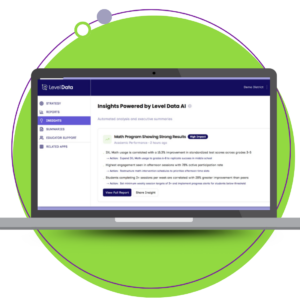 Administrators cannot spare hours digging through every data point to guide decisions. Effective data-driven decision-making tools must surface relevant insights through real-time dashboards and reporting with easy-to-understand visuals.
At the same time, these tools should not oversimplify the complexity of student learning and resource management. AI features can not only assist administrators with accessing information for faster decisions, but also provide crucial context alongside key data patterns to ensure even quick decisions remain sound.
Data Integration Across Systems
K–12 educators often navigate far-flung data systems and platforms that struggle to “speak” with one another. Yet a unified data system is essential for cultivating data-driven decision-making, whether in a single school office or across an entire district.
Administrators need platforms that accurately consolidate and analyze critical data, including student academic outcomes and district operational information, under a single digital roof. Not only does this spare leaders the headache of chasing down the right information, but it also illustrates the interconnectedness of funding sources, learning outcomes, program costs, and more.
It’s at these intersections that administrators make their most important and impactful decisions for student success.
Predictive Analytics and Forecasting
Every organization benefits from taking a forward-looking position on their strategic investments. Predictive analytics and forecasting tools use past data patterns to make future estimates.
Improving student attendance is an example of how forecasting changes the course of a student’s future for the better. By identifying patterns across children who are missing school, school administrators can take concrete action to help students get to class every day. Whether they invest in a new bus route or create a 504 plan for a child, the right data supports educators to make those decisions.
Connect the Dots Between Financial Investments, Educator Effectiveness, and Student Achievement
From tracking IEP service minutes, districtwide purchases to measuring coaching and professional development effectiveness, and outcomes related to curriculum investments, we equip K–12 teams with the insights needed to measure progress, align stakeholders, and maximize budgets.
Decision-Making Challenges Administrators May Face Without the Right Tools
Without the right tools to support them, administrators bear the weight of finding, analyzing, and interpreting data to guide day-to-day efforts and strategic planning. In such cases, rarely does true data-driven decision-making actually happen.
Fragmented or siloed data that live across disconnected systems makes it difficult for administrators to see the full picture of a particular situation, muddying the waters for making decisions. Even with clean and clear data, some tools fail to deliver data in ways that are truly useful to administrators. Having access to state reading assessment data for every third grader going back several years doesn’t tell a principal how to improve tomorrow’s third-grade reading scores. The right platform goes beyond merely showing endless data and instead surfaces specific, unique, and relevant trends that are actionable.
How To Implement Data-Driven Decision-Making Tools in Your District
Follow these strategies to investigate and implement data-driven decision-making tools in your district:
- Start with clear goals and KPIs. Get specific about the purpose of every tool. Engage voices from every corner of your district or school office.
- Ensure proper training and staff “buy-in”. Create clear guidelines and expectations for how each role in your organization can or should use these tools. Emphasize the value of creating a shared language and infrastructure.
- Build a data culture. Even small acts like pulling up ROI dashboards in monthly cabinet meetings or celebrating teachers’ growth with numbers during evaluations set the tone for how your organization expects every team member to leverage data.
How Level Data Can Help Your School District Leverage Data-Driven Decision-Making
K–12 leaders like you make decisions every day, and even the small ones carry consequences for your students. You deserve modern tools that deliver concise, precise insights that help you make informed, thoughtful decisions.
Whether you are tracking IEP service minutes, nurturing the next generation of teacher leaders through coaching, or mapping the academic impact of every dollar spent, Level Data’s solutions form the foundation for effective data-driven decision-making in K–12 education. Contact us to share your strategic priorities, and we’ll help you select the best tools to support them.
