Today’s K–12 staffing environment remains uncertain to say the least, and this instability comes with real consequences. Not only does a staff departure at any level impact student learning, but it also strains a district’s budget and the staff who stay behind. Understanding the academic return on investments in staff, like teacher recruitment and retention, helps district leaders more effectively utilize their resources to weather the storm.
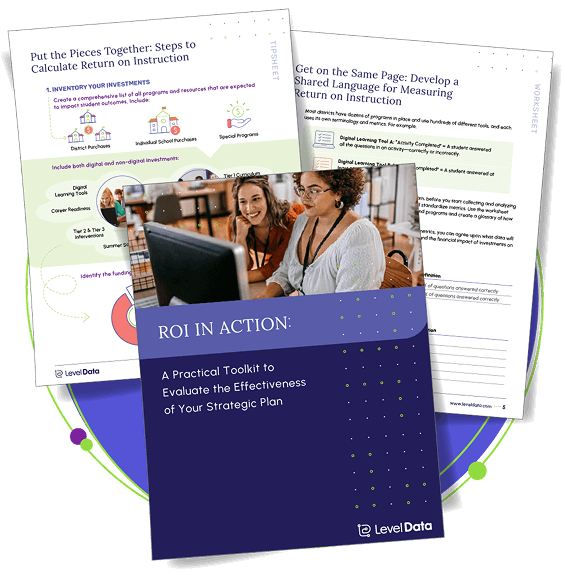
In this article, you will learn the meaning of ROI in education and how it supports districts with strategic staffing investments. You will also discover three strategies for allocating district funding, time, and effort to keep student learning going, even amidst staffing uncertainty.
Let’s dive in.
The impact of educational ROI on staff retention and efficacy
Unlike the business world, a district’s “return on investments” isn’t just a ratio of profits to costs. Student learning outcomes weigh heavily in the equation, which makes “educational ROI” a unique yet critical data point for strategic district planning and decision making. And K–12 leaders need this insight now more than ever as they face budget uncertainty, especially around teacher training and retention funding.
The results of a recent EdWeek Research Center and Gates Foundation survey with district and school administrators underscore this urgency. In their responses, over 30% of participants pointed to staffing turnover at all levels of their organization as a major obstacle to aligning their financial and instructional priorities:
EPE report: “Survey respondents most commonly pointed to… an inability to sustain [instructional and fiscal] alignment over time due to leadership or staffing changes (35%) [and] inconsistent instructional goals stemming from staffing turnover (33%).”
Mismatches between strategic instructional goals and budget decisions can spell disaster. Districts may waste limited dollars on ineffective learning programs or miss opportunities to deepen investments in initiatives that positively impact student learning. In more extreme cases, districts often make financial decisions to save money quickly, but end up with negative student learning and staffing consequences.
eROI is the key to aligning funding, instructional priorities, and educational investments, including those made in hiring, recruiting, training, and retaining teachers and other staff.
Let’s explore three strategies for leveraging eROI analyses to manage, mitigate, and even prevent challenging staffing turbulence.
1. A cross-functional team analyzing eROI together
District decisions can be made in silos, with individual departments spending their budgets on programs or people based on metrics they identified independently (more on this in a moment). Cross-functional decisions about funding and program impact not only help stretch a more limited department budget but also empower district administrators to make more effective investments.
Leta Dietz Smith, a Title I and ESSER Grant Manager at Lee County School District, regularly uses eROI analyses to maximize her district’s funding against key instructional priorities. As she shared in a recent webinar, no analysis could happen without first bringing together the right people with the right expertise: “We have to empower our finance people to start making decisions that impact education, and we also need to empower our educators to make effective decisions that financially impact the district.”
From a staffing perspective, a blend of institutional knowledge pays off. Human resources offers expertise about salary schedules, employee training, recruiting, and more. The business office holds the keys to funding sources and their rules, including for dollars that fund unique roles or extra duties, like teacher-leaders. The curriculum and instruction department can contextualize the student learning goals behind investments made in teachers, like coaching for new or early-career teachers
With all these experts in one room, district teams can begin triangulating valuable insights to build a more cohesive picture of staffing investments, their value, and, as a result, their importance for budgeting.
2. The right success metrics for the right priorities
A representative team alone does not unlock the value of eROI. Administrators must also share a common language and understanding of three key factors related to every educational investment:
- Available funding and funding sources
- Relevant student participation, usage, and academic data
- The district’s strategic instructional priorities
Let’s continue with instructional coaching as our example to demonstrate why this alignment is so crucial. Most districts spend time, money, and effort on coaching with the aim that, by improving a teacher’s instructional practices, they in turn improve a student’s learning outcomes.
Naturally, district leadership wants to see tangible results given the costs of these programs, but which results matter most will differ based on who you ask. The business officer values budget fidelity, whereas the curriculum and instruction officer wants to see student test scores rise. In truth, these and other “success” metrics are useful, but they become more meaningful when prioritized and contextualized against one another.
For instance, a district in a financial pinch might consider downsizing its coaching team or cutting stipends for teacher-leaders for immediate relief. But this benefit may incur other academic and even staffing costs, like a smaller internal pipeline for future leadership roles or a more stretched (but less effective) coaching team.
This district will want its business officer and its curriculum and instruction officer speaking the same language and referencing the same shared set of priority metrics (that they both understand well) before recommending this or any course of action.
Did You Know?
Grow by Level Data amplifies the impact of your coaching activities by streamlining the process, data, and documentation that drives it. Learn More.
3. Consistent instructional goals, strategic plans, and supporting budgets
Districts can sometimes struggle to keep budgets and strategic priorities and instructional goals in lockstep. Not only is this misalignment frustrating for teachers and administrators, but it also slows a district’s momentum in pursuing those objectives effectively.
Let’s examine how eROI analyses (as well as a cross-functional team and clear data) can help your district team bring instructional goals, strategic priorities, and fiscal investments into cohesion with strategic staffing priorities.
Start with your district’s strategic plan.
For every priority listed, clearly identify which programs, their associated costs, and their relevant eROI metrics will support its achievement. For example, a coaching initiative supports not only instructional improvement priorities (like “increasing student reading scores on state assessments”) but also staffing ones (such as “improving new teacher retention rates”).
Realign school leadership with your strategic priorities.
This step is about equipping your school leaders with clear focus areas, success metrics, and educational investments that tie back to the district’s strategic priorities. From the coaching lens, this is the first step to achieving district-wide coaching alignment.
Engage other core stakeholders with the narrative behind your strategic goals.
With coaching, for instance, a parent doesn’t need details about each coaching cycle, but they do want to know that their district is spending taxpayer dollars in ways that benefit their child. A board member will want to understand the financial goals and impact of your budget and the evidence behind your decision to expand, shrink, or maintain a coaching program’s funding.
Drive Teacher Growth and Student Learning, Even During Chaotic Times
In sum, understanding the educational return on your district’s investments helps you strategically and responsibly allocate your resources toward strategic goals—including and especially your staff retention and development. Empowered with this insight, you can more effectively lead your district through turbulent staffing conditions and keep everyone, from the classroom to the district office, working in synchrony to support student growth.