

One million.
That is how many IDEA-eligible students are anticipated to enroll in special education services across the U.S. over the next five years. Even so, many districts and schools continue to struggle with meeting the basic special education requirements outlined in state and federal laws.
How do district leaders like you ensure your schools effectively balance meeting this growing demand while adhering to key regulations?
Explore three strategies to help your organization not only achieve greater compliance but also elevate special education programming to catalyze student outcomes.
1. Streamline your IEP processes and reporting
In special education, consistent IEP tracking and accurate compliance reporting form the foundation for effective programming. Yet even these goals may feel overwhelming to accomplish. After all, you likely know just how frequently instances of noncompliance can occur, thanks in part to these common challenges:
- Isolated data: How often must special education professionals log services and minutes in one tool, then copy or re-enter that data into another platform for tracking IEP goals, then do it all over again for state reporting? Isolated data both increases the work required to wrangle it all and the risk of inaccurate data.
- Varied documentation: Even in the same school, special education services may be tracked inconsistently. This can result in missing service information, incomplete data for IEP reviews, or, at worst, noncompliance with state or federal documentation requirements.
- Data security and privacy issues: Special education practitioners are stewards of particularly sensitive student data. Without strong protections and secure technology, districts risk exposing this information and breaching confidentiality.
- Murky “big picture” on service impact: Special education services are meant to support students with unique learning needs to grow and thrive. It can be difficult enough at times to ascertain how effective and appropriate services are for a single student, let alone an entire classroom, school, or grade level.
Not only do these issues impact day-to-day IEP processes and required compliance reporting, but they also complicate your role as a special education leader to steer a whole program.
Conversely, when you bring these elements into your program’s infrastructure, you will reduce the risk of noncompliance while also making core administrative practices more efficient (and effective):
- One way for all practitioners to log IEP services, minutes, and other key data—ideally in less than a few minutes.
- Unified documentation systems that interconnect data and services at all levels, from the individual student all the way up to the district.
- Centralized task management and automation to compile, clean up, and submit reporting with as little human effort as possible.
- Easy-to-understand dashboards with insights into the full scope of special education services, as well as tools for deeper analysis.
- Strong data protection protocols that safeguard student information from the point of entry.
Look no further than Brolly by Level Data to bring these capabilities into your schools.
Endorsed by the Council of Administrators of Special Education (CASE), Brolly outperforms other special education software in its ability to streamline IEP processes, improve accurate reporting, and identify and resolve noncompliance issues. Learn how one special education leader uses Brolly to advance inclusive classroom practices across schools and free up her staff to focus on the students they serve.
2. Deepen your teachers’ differentiation skills through targeted coaching
Targeted coaching for staff offers another way to maximize learning outcomes for students with special needs, as well as drive greater program impact. Whether you employ external coaches, group coaching, peer models, or other frameworks, these growth opportunities can help each teacher better accommodate or modify instruction to support students with IEPs to thrive.
However, too many coaching programs flounder before districts can realize their benefits. A common issue is a lack of implementation fidelity, thanks to inconsistent coaching practices, disparate documentation, and inaccessible coaching and impact data. Another major gap arises when coaching programs fail to align with bigger district priorities beyond professional development.
Fortunately, with careful planning and a comprehensive approach, you can close these gaps and strengthen both your special education and coaching programs.
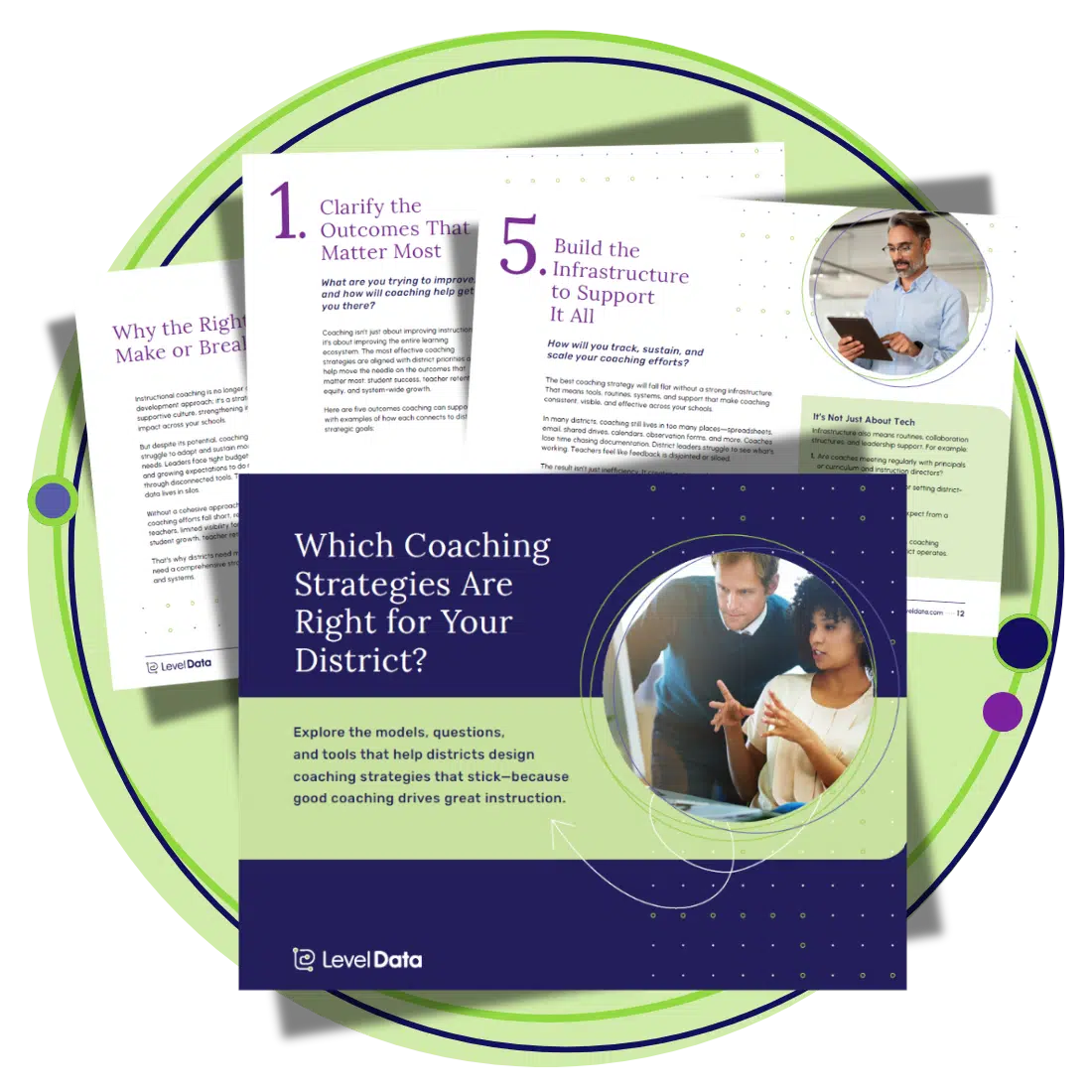
Did you know? Grow by Level Data gives special education teams the right technological and administrative infrastructure to meet their coaching needs, regardless of the model or method you employ. Learn more.
3. Understand the impact of funding on special education outcomes
In addition to strong processes, reporting, and teacher coaching in place, your team needs reliable data to monitor how special education services deliver on your district’s strategic goals.
IEP goals and data, as well as student achievement, teacher observational data, and more, all contribute to understanding the bigger picture of your special education programs. However, many districts overlook funding as part of program evaluation, specifically how each dollar you spend correlates to key outcomes.
Even with laws in place that mandate special education services for select students, the future of key funding sources looks uncertain amid ongoing layoffs and other major changes proposed for the Department of Education. In response, states may need to assume greater responsibility for managing and overseeing special education funding and compliance enforcement. These situations add to the existing challenges you may face, such as hiring and retaining special education teachers.
Now more than ever, you must understand exactly how spending on programs triangulates against student outcomes—in other words, you need to measure the educational returns on your investments (or eROI).
Level Data’s Return on Instruction platform gives you the tools to streamline student achievement, funding, and participation data from instructional programs, including those within special education. Not only does this information allow you to demonstrate fiscal responsibility to important stakeholders in your community, but it also gives you a data-driven compass to make better program decisions and achieve your strategic goals.
Ready to elevate special education supports in your community? The Level Data ecosystem simplifies K–12 data management and workflows, from automation to compliance reporting to learning impact analyses. By giving educators data they can trust, we empower leaders to make critical decisions today that deliver student growth tomorrow. Explore our solutions.
