

As K–12 education faces greater demand for more transparency, data, and accountability, professional learning initiatives like coaching are coming under scrutiny.
While empirical research shows that strong coaching leads to student academic gains, many districts struggle to implement it effectively. From scattered documentation to lopsided oversight responsibilities, these challenges can end a coaching program before it can build momentum.
Level Data recently sat down with Mindy Rogers, Director of Opportunity Culture at Carlsbad Municipal Schools (CMS) in New Mexico, to discuss how to navigate these roadblocks to coaching. CMS launched a strategic coaching initiative, and its efforts are already paying off.
Watch the full conversation here!
In just two years, students in coached classrooms achieved tremendous gains in NWEA MAP scores as well as improved proficient and advanced scores on state assessments. Some even grew two years or more within a single school year.
Keep reading to discover the four ingredients that Rogers credits with catalyzing CMS’s coaching initiative.
“I knew we needed [Grow] from the start. We had to have the accountability and data tracking from the campus and district level… for this program to succeed.”
Mindy Rogers, Director of Opportunity Culture at Carlsbad Municipal Schools
#1: Distributive Leadership in a Coaching Framework
CMS first spent a year working with a consulting partner, Public Impact, to define the mission statement for implementing the Opportunity Culture strategic staffing model. As Rogers explains, CMS chose this approach because traditional school staffing makes coaching difficult.
In traditional models, teachers often work alone, isolated in their classrooms without additional support. Inconsistency in instructional practices means students experience an inconsistent quality of instruction year to year. Further, excellent teachers face limited in-school growth opportunities, which can mean that students lose these wonderful instructors to better-paying district jobs or careers outside the classroom.
Last, principals often carry the weight of program oversight for efforts like coaching. This stretches building leaders’ capacity and makes it difficult for them to tailor their support to specific educators’ needs, such as new or alternatively licensed teachers.
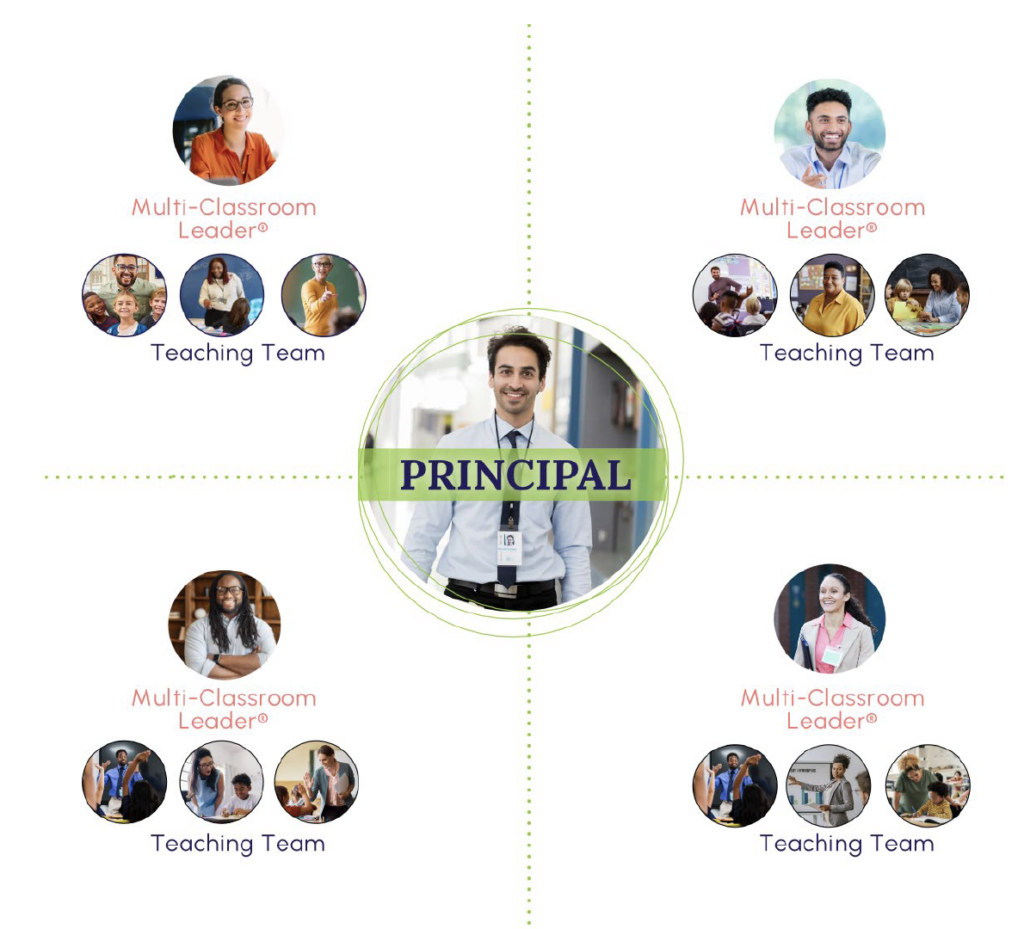
So CMS created a distributive leadership approach to staffing.
In this approach, “multi-classroom leader educators” (MCLs) assume a mentorship role in which they coach up to eight fellow teachers. They become responsible for setting goals, doing classroom observations, reviewing data for progress monitoring, and more. MCLs also work closely with their principal, who guides broader instructional strategy for the whole school.
“This model was a game-changer for CMS,” said Rogers. By spreading responsibilities across these stakeholders:
- All teachers received more instructional support than in the traditional model.
- MCLs prioritized coaching to match individual teachers’ needs (meaning, coaches could offer feedback more frequently to new teachers, while also specifically tailoring their mentorship for veteran teachers who need less frequent feedback).
- MCLs gained new career growth opportunities, as well as increased pay for these additional responsibilities.
- Principals focused on instructional leadership by coaching the MCLs, guiding program implementation, and monitoring key inputs to this work.
As a result, students received more consistently great teaching each year as MCLs supported teachers to improve their practices.
#2: Clear Data & Metrics
Even with a vision and framework established, the district needed to know how well this major investment was working to achieve the program’s goals, which meant they needed clear, measurable data.
Rogers cited several examples of data that CMS tracks:
Low inference data
This information is typically gathered during classroom observations and helps a coach establish a baseline understanding of what’s happening in a classroom. For example, a coach may walk in and note how many students are working on an assignment independently, are at the tech lab, are in a small group at the teacher’s desk, are in the bathroom, etc. Coaches can then tailor their support based on what they observe. This sampling of classroom activities can also be tracked again in future observations to see how classroom dynamics shift with coaching support.
Coaching engagement data
This “softer” information includes professional learning community (PLC) attendance rates, agendas and outcomes for each PLC meeting, feedback from coaches to teachers, and more. District leaders analyze this data by campus to watch how teams move through the program framework over the year. Principals go deeper, monitoring individual coach and teacher engagement and lending their support to keep implementation on track as needed.

Student assessment data
Ultimately, instructional coaching is about improving student achievement. CMS leadership reviews both summative and formative assessments at all three levels (district, school, and classroom) to monitor the program’s impact, while coaches use formative assessments to understand how much a teacher is improving their instructional practices and whether students benefit.
“When you’re building a culture of coaching in the district, and you also have the data to follow it up… it confirms everything we have been saying all year.”
#3: Sustainable Funding & Scheduling
It may surprise many district leaders to learn that CMS funds their coaching program within their existing budget. By eliminating dependence on external funding—which remains uncertain even as the 2025-26 school year begins—CMS can focus on maximizing this investment’s impact over the long run.
Rogers encouraged districts to get creative with funding. For example, a school may elect to remove a vacant, full-time teacher role and instead distribute that salary to teacher leaders like MCLs in their building. Though this approach requires placing a few more students across classrooms, it also recognizes MCLs’ increased reach to impact student learning with a high stipend. In parallel, a supported MCL can then better support teachers with larger classes.
CMS also revised its master schedules for each campus. Every teacher and MCL had sufficient time in their weeks to participate in the coaching model as intended. This structural change helped all parties maintain fidelity to their roles in the program, maximizing instructional minutes without sacrificing student learning.
Did you know? Level Data’s Return On Instruction platform triangulates program costs, participation, and student academic data to clarify if major investments like instructional coaching are paying off—literally. Reach out to learn more.
#4: A Digital Coaching Infrastructure
There is one critical practice that every district needs—but many often overlook—to ensure coaching is successful: a digital coaching infrastructure. Rogers emphasized that CMS’s coaching success would not have been possible without Level Data’s Grow platform.
Grow centralizes and streamlines the coaching program for all stakeholders. Teachers easily access feedback and resources from their MCL; MCLs have one place to manage all of their coaching responsibilities, including time-stamped notes from classroom observations, goals for individual teachers, PLC agendas and outcomes, and much more.
Principals can also use Grow to quickly access building-level data to support individual MCLs as well as oversee program implementation. District leaders like Rogers can assess district-wide patterns in coaching and leave targeted comments for specific campuses directly in the platform.
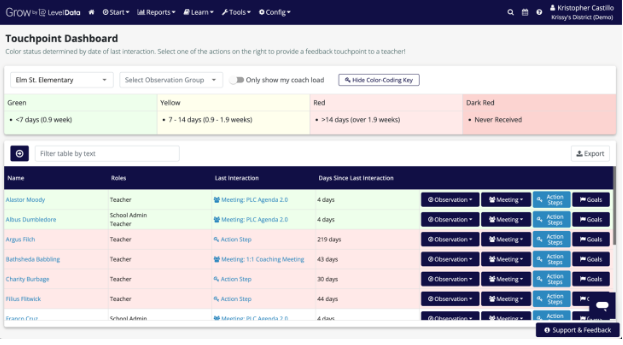
Equipped with Grow, Rogers and the entire CMS team are eager to see how far this coaching program can go to improve student learning as they scale to seven campuses in the upcoming school year.
Are you ready to uplevel your instructional coaching and deliver student gains? Grow is the ‘all-in-one’ coaching platform that enables districts to create a common coaching language, framework, and reporting structure to ensure coaching is happening and decisions are made with clear data.
Request a demo today.
